
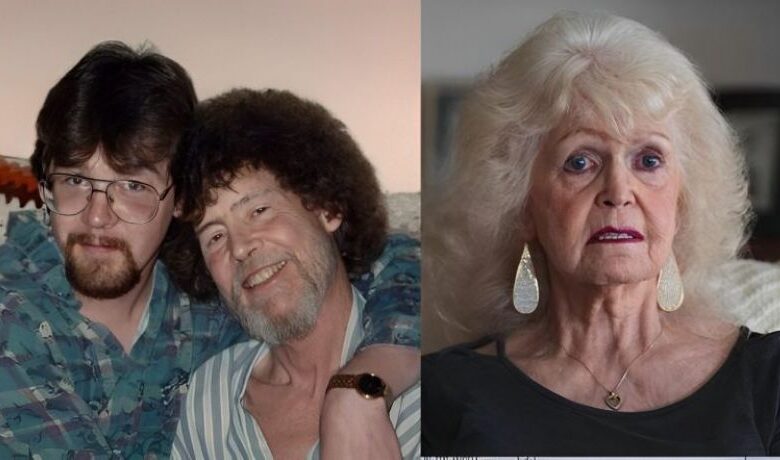
Vivian Ridge is known to many as the first wife of the iconic painter and television personality Bob Ross, yet her own life story carries depth, courage, and quiet artistic purpose. Born in Winston‑Salem, North Carolina in the mid‑1940s, she grew up with a deep appreciation for nature and creative expression that shaped her worldview early on. Rather than simply dabbling in art as a pastime, Vivian embraced it with dedication and curiosity, nurturing her talent in ways that would impact her life and relationships. While many remember Bob Ross for his calm voice and scenic landscapes, Vivian’s early influence helped shape the creative environment in which he first thrived. This article explores her journey — not through fame, but through the meaningful life she crafted with integrity and intent. Her story demonstrates that influence without publicity can be just as profound and enduring as that which is visible to millions. In remembering Vivian, we remember a woman who chose connection, authenticity, and artistry over attention.
Early Life and Love of Art
Vivian Patricia Ridge was born in a modest home in Winston‑Salem, North Carolina, where the gentle curves of local hills and quiet woods instilled in her a lifelong love of natural beauty that would subtly influence her artistic sensibilities. From childhood, she demonstrated a keen eye for detail, sketching flowers she spotted on walks and studying light across the surface of a leaf with patient curiosity. Her early education allowed her to explore visual arts, and teachers noted her thoughtful approach and aesthetic sensitivity long before she became associated with any public figure. Rather than pursuing art for recognition, she saw it as a way to explore emotion and observe the world, valuing what beauty reveals about the self. This passion led her to academic study, where her understanding of artistic movements and context deepened significantly. Even as a young student, Vivian understood art as a dialogue between the creator, the material, and the viewer. In these early years, her creative identity was quietly forming, rooted not in spectacle but in heartfelt engagement with life’s subtle wonders.
Education and Meeting Bob Ross
Vivian’s artistic path led her to Wake Forest University, where she pursued Art History, a field that blended academic rigor with creative inquiry, giving her insight into centuries of artistic innovation and cultural context. At this formative time, she met Bob Ross, a fellow art student whose passion for painting matched her own interest in form and expression, though their styles and temperaments were distinct. Their shared fascination with creative process turned into friendship, and soon into something deeper as they spent afternoons in studios discussing color theory, composition, and what art means in a life well‑lived. While Bob was developing techniques that would eventually define his career, Vivian’s thoughtful understanding of historical artistic principles gave their conversations depth and shaped their shared vision of creative life. Rather than glamour or competition, their connection was grounded in mutual respect and a shared belief that art could be both reflective and transformative. These early years, immersed in collegiate studios and thoughtful dialogue, were among the most meaningful chapters of Vivian’s life, marking the beginning of a partnership that was as intellectual as it was personal. Through those conversations and shared hours before canvases, their bond became rooted in both heart and craft.
Marriage, Partnership, and Shared Creativity
In 1965, Vivian Ridge and Bob Ross married, joining their lives in a blend of companionship, artistic growth, and shared responsibility. In a small home filled with brushes, paints, and open windows to North Carolina’s gentle light, they built a life where creativity was as vital as conversation. Rather than pursuing separate ambitions, they supported each other’s explorations — Bob with his evolving painting style, and Vivian with her art history knowledge and own creations. Their home became a place where art was not a performance but a practice rooted in daily life, where quiet afternoons could be spent with brushes in hand, fostering an atmosphere of introspection and collaboration. There was comfort in knowing that artistic questions could be discussed not only in classrooms or studios but around dinner tables and over morning coffee. Their marriage brought together two creative souls whose priorities centered less on public acclaim and more on shared discovery, connection, and nuanced engagement with beauty. This early partnership laid silent roots that would nourish both of them as they navigated the complexities of family life and personal growth together.
Family Life and Creative Routine
The birth of their son, Robert Stephen “Steve” Ross, in 1966, brought joy and new purpose to Vivian and Bob’s lives, gently reshaping their focus from personal artistic pursuit to nurturing family creativity. In the Ross household, art became a language spoken by all — not something reserved for gallery walls, but woven into daily existence through shared painting sessions. On weekends, the family might set up easels under old oak trees, where laughter rippled between brushstrokes and the breeze carried the scent of grass and leaves. While Bob worked on expansive landscapes with layered trees and misty horizons, Vivian focused on smaller subjects — flowers, leaves, and gentle views that celebrated intimate detail. Their son Steve sat between them, soaking up technique and compassion alike, learning not only how to use brushes but how to see the world with openness and curiosity. These moments were never documented for fame or broadcast; they were lived in the simplicity of presence and mutual encouragement. They shaped a young mind with the belief that creativity was not a destination but a companion on the journey of life. In this environment of shared expression, family ties and artistic influence became inseparable.
Behind the Scenes of a Rising Artist
As Bob Ross began to expand his artistic reach beyond galleries — first through local workshops and later through educational television — Vivian stood beside him with quiet support, offering balance and commitment even as his path grew more demanding. She understood the patience and discipline behind artistic growth and shared that understanding with him in moments when uncertainty or self‑doubt emerged. While she chose not to step into the public eye, her conversations, encouragement, and grounding presence influenced the early formation of Bob’s confidence as a teacher and painter. She listened to his ideas, discussed color theory with him, and offered perspectives shaped by her academic background — bridging technical understanding and heartfelt simplicity. At a time when Bob’s calm voice and gentle instruction were finding future audiences, Vivian’s influence was felt behind closed doors, around kitchen tables, and in quiet studios. She taught not through broadcast, but through consistent presence and reflective dialogue, shaping understanding in ways that public recognition rarely captures. Her role in this chapter of Bob’s life was not one of visibility, but of indispensable support — the soft but steady foundation on which his career would soon flourish.
Challenges and the Path to Separation
With Bob’s career gaining momentum, expanding into workshops that traveled beyond North Carolina and eventually into televised instruction, the rhythm of family life began to shift, placing new demands on both their aspirations and their relationship. Where once creativity was shared within a steady home, increasing travel and professional commitments introduced distance — not just in miles, but in daily experience. Vivian valued the rooted stability of a home life, where her art and motherhood could grow with consistency; Bob’s path led toward broader audiences and sustained public engagement. These differences were not born of conflict, but of evolving priorities — a reminder that love and shared history do not always lead to shared futures. In 1977, after twelve years together, Vivian and Bob chose to end their marriage, navigating separation with respect and care, remaining focused on the well‑being of their son. Though the split was private and understated, it reflected a deep understanding of life’s complexities and the courage to pursue paths that honored individual needs. Their separation was not a rupture of respect, but an acknowledgment of growth’s changing directions, highlighting that life’s transitions can be met with dignity rather than drama.
Life After Divorce
After parting ways with Bob Ross, Vivian Ridge embraced a quieter rhythm of life, returning to North Carolina and focusing her attention on personal fulfillment, artistic expression, and raising her son with intention and care. Rather than seeking public platforms or forming a new public identity, she chose privacy and reflection as frameworks for her work and her inner world. Her days were filled with gentle routines — tending her garden, standing before canvases in quiet rooms, and teaching art in small, private circles where attention was an invitation, not a requirement. Those who knew her described a woman of thoughtful presence, someone who offered insight without imposition and beauty without performance. Her artistic focus remained rooted in detail and observation — small moments of form, color, and quiet harmony that echoed her early experiences with nature. While her work remained largely unseen by the wider world, it carried the sincerity of someone exploring life not for applause, but for meaning. In choosing this path, Vivian lived on her own terms — crafting a life defined by personal values rather than public metrics, embodying the belief that significance is not only measured by visibility.
Her Son Steve and Artistic Legacy
Vivian’s son, Steve Ross, became a living bridge between his parents’ creative worlds, carrying forward both the technical inspiration of his father and the thoughtful artistic foundation his mother cultivated. Steve appeared in a few episodes of The Joy of Painting, not as a celebrity, but as a family member sharing what he had absorbed — a gentle presence that spoke to his upbringing and the supportive environment created by both parents. Growing up in a household where artistic exploration was not merely encouraged but practiced daily, Steve learned discipline alongside joy, patience alongside passion. Rather than seeking fame, his artistic journey reflects the grounded values instilled by Vivian: attention to detail, appreciation for nuance, and a deep respect for artistic integrity. This legacy is not one of flash or spectacle, but of continuity and quiet influence, showing how the spirit of creativity can be transmitted through lived example rather than public acclaim. Steve’s continued presence in art — both through his work and his representations — stands as a testament to the environment of mutual encouragement his mother nurtured. In this way, Vivian’s influence resonates beyond her years, carried forward in brushstrokes, values, and creative intent.
A Life of Quiet Purpose
In an age where fame and visibility often define success, Vivian Ridge chose a different measure, one marked by reflection, depth, and rooted engagement with the things that mattered most to her: family, artistic exploration, and personal authenticity. Instead of seeking attention, she embraced stillness, viewing art not as performance but as a companion in life’s quiet moments. Her choice to remain private was not avoidance, but intention — a deliberate affirmation that meaningful lives can be lived away from public platforms, shaped by values rather than visibility. Friends and family remember her as thoughtful, present, and deeply curious — someone whose presence was calm but consequential. Whether in gardens she tended, canvases she colored, or conversations she held, her life embodied a gentle strength and an enduring respect for beauty. Her commitment to privacy was not a retreat; it was a declaration that fulfillment does not require an audience, and impact does not always demand applause. In remembering Vivian, we recognize that influence can be deeply personal, affecting individual lives even when unseen by the wider world.
Passing and Reflection
On May 3, 2018, Vivian Ridge passed away after a private battle with illness, leaving behind a legacy lived with dignity, intention, and quiet artistic purpose. True to the way she lived, her passing was marked not by public announcements or media spectacle, but by private gatherings and personal remembrance among those who knew and loved her. Her death reminds us that not all lives connected to well‑known figures unfold under the glare of public scrutiny — many are shaped by private moments, deep reflections, and the loving influence they have on those closest to them. In choosing peace over publicity, Vivian taught a lasting lesson about the value of inner fulfillment and the strength of quiet endurance. Her life stands as a testament to the power of authenticity and the beauty that can flourish when one lives according to deeply held values rather than external expectation. Though she may not have walked before millions, her influence walks on in the hearts and creative spirits of those she touched with her presence.
Also Read: Who Was Alice Marrow? A Look at the Woman Who Raised Ice-T
Vivian Ridge’s Lasting Influence
While history may remember Bob Ross as a public legend whose landscapes brought calm and joy to countless viewers, the story of Vivian Ridge reminds us that many of life’s vital threads belong to those who choose depth over display. Her influence lives on through her son, through the private lessons she shared with students, and in the quiet moments of art that ripple through the lives she touched. In honoring her memory, we honor the creative spirit that thrives away from spotlight — a spirit that invites us to see beauty in subtlety, practice patience without applause, and value presence over performance. Her legacy proclaims that every life has significance, not because it is seen by millions, but because it is lived with honesty, compassion, and heartfelt intention. In remembering Vivian Ridge, we remember not just a name tied to fame, but a life of gentle impact, unfolding away from view yet never truly unnoticed.
FAQs
Who was Vivian Ridge?
Vivian Ridge was the first wife of painter and TV host Bob Ross. She was an artist and mother who lived a private life, influencing her family and son through her passion for creativity and thoughtful guidance.
Did Vivian Ridge pursue a career in art?
Yes, she studied Art History at Wake Forest University and continued painting throughout her life. She preferred private art practice and teaching rather than seeking public recognition.
Was Vivian Ridge involved in Bob Ross’s career?
While she did not appear publicly, Vivian supported Bob’s early career by providing emotional guidance and artistic insight, helping shape the environment in which his talent grew.
Did Vivian Ridge have children?
Yes, she had one son, Robert Stephen “Steve” Ross, who inherited a love of art from both his parents and later appeared on a few episodes of The Joy of Painting.
How is Vivian Ridge remembered today?
She is remembered for her quiet strength, dedication to family, and influence on creativity at home. Her life reflects a legacy of thoughtful living and artistic inspiration away from the spotlight.